Open-plan homes feel modern and spacious, but they also present a specific set of cooling challenges. High ceilings, continuous sight lines, and large connected rooms let conditioned air move freely, which sounds good until you notice hot spots, uneven airflow, and a utility bill that creeps up. For homeowners in Manor, TX, where summer heat is persistent and humidity is significant, getting the right AC installation matters more than simply choosing the fanciest unit. I’ve worked on dozens of installations in similarly configured homes, and the right approach blends equipment selection, ductwork and return design, placement strategy, and maintenance planning. Below I lay out what works, what to avoid, and how to partner with a contractor like ATX Heating & Air Conditioning to get predictable comfort without overspending.
Why open-plan homes need special attention Open-plan spaces change the rules for sizing and distributing air. A 2,000 square foot house with many small, partitioned rooms will behave very differently from a 2,000 square foot house where living, dining, and kitchen are one continuous volume with 10 foot or higher ceilings. In open spaces, heat sources are more visible and concentrated: the kitchen, large windows, and a south-facing wall can create a single warm mass. Because rooms are connected, a small unit struggles to establish consistent temperatures. Conversely, installing a single oversized unit creates quick short-cycling, dehumidification loss, and higher wear. The balance is not intuitive. That’s why proper load calculation, duct design, and control strategy are essential.
Sizing is more than square footage I see homeowners pick systems based on tonnage rules of thumb, such as 1 ton per 600 square feet, and then wonder why humidity remains high. The correct approach begins with a Manual J load calculation. Manual J accounts for insulation, window area and type, orientation, ceiling height, occupancy, and local weather data. In Manor TX, solar gains and humidity push sensible and latent loads differently. A properly sized system will meet both the temperature and moisture removal needs. That often means choosing a system with adequate dehumidification capacity and planning for longer run times rather than a single large unit that cycles off after a few minutes.
Ductwork and air distribution: the long game Even a perfectly sized condenser will fail to deliver comfort if the distribution network is poor. Open-plan homes need carefully planned trunk-and-branch duct layouts, return placement, and register selection. Two mistakes show up most often: undersized return paths and registers that direct air poorly.
Return air is the hidden hero. If returns are too few or too small, the system struggles to pull warm air back for conditioning, creating pressure imbalances that can pull outdoor air through gaps or reduce fresh airflow to farther corners. For large open spaces, I usually recommend at least two strategically placed returns, one near the living area and another closer to the kitchen or high-load zones. Returns should be unobstructed and not hidden behind decorative grilles that reduce flow.
Supply registers matter as much as tonnage. Wide registers mounted high can push air along ceilings, encouraging mixing. Adjustable directional registers let you fine-tune how air enters the space. In an open-plan home, balancing registers so that conditioned air reaches the farthest seating area without blasting the kitchen island is a craft. Professional contractors will perform a static pressure test and adjust dampers to balance flow. If your install includes long runs or multiple bends, add inline turning vanes or increase trunk size rather than relying on higher fan speeds.
Zoning and controls: where comfort meets efficiency Zoning changes the math for open plans. If the house includes a loft, a sunroom, or a master suite that needs a different set point, motorized dampers and multiple thermostats allow the same central system to serve different needs. Zoning reduces wasted cooling and improves occupant comfort when people have different preferences. There are trade-offs: zoning adds cost and increases system complexity. Dampers need control wiring and periodic calibration. But for households with variable occupancy or significant solar gain in only part of the space, zoning recovers its cost quickly through reduced runtime and fewer comfort complaints.
An increasingly popular alternative to complex ductwork and zoning is a ductless solution or a hybrid system. Multi-zone mini-split systems let you place small heads in specific areas, providing precise control and excellent dehumidification. For an open-plan living room combined with a kitchen, a ducted system for the main volume and a mini-split for a sunroom or upstairs loft can be a smart compromise. Mini-splits eliminate the need to run new ductwork through finished space, and modern inverter-driven compressors provide smooth modulation that keeps humidity in check.
Humidity control: the overlooked part of comfort Temperature is easy to measure, humidity less so, but it drives comfort as much as degrees. In Manor, TX, the air can feel oppressive even at 75 degrees when humidity is high. Short-cycling systems fail to remove sufficient moisture because moisture removal is correlated with runtime. Choosing a system with a variable-speed compressor and an ECM blower, and avoiding oversized equipment, increases run time at lower speeds and improves dehumidification.
Sometimes supplemental dehumidification is necessary. Standalone whole-house dehumidifiers integrate with HVAC systems and can maintain relative humidity around 50 percent, which feels comfortable and protects wood floors and furniture. Be wary of relying on thermostat settings alone to manage humidity. A thermostat that reads only temperature will not command additional dehumidification unless you have a model that integrates humidity sensors or a dehumidistat.
Equipment selection: beyond SEER numbers High SEER ratings matter for efficiency, but the compressor type and blower control determine how a system performs in a real home. Single-stage compressors are simple, but they run at full capacity until the thermostat is satisfied and then stop. That behavior results in short cycles and poor humidity control. Two-stage and variable-speed compressors modulate output so the system runs longer at lower power and keeps the environment drier and more even.
Similarly, variable-speed air handlers adjust airflow to match load, reducing noise and improving comfort. When discussing options with technicians from ATX Heating & Air Conditioning or other local pros, ask about blower CFM ranges at different static pressures. Make sure the equipment matches the ductwork characteristics. Oversized fans forced through small ducts produce noise, energy loss, and uneven distribution.
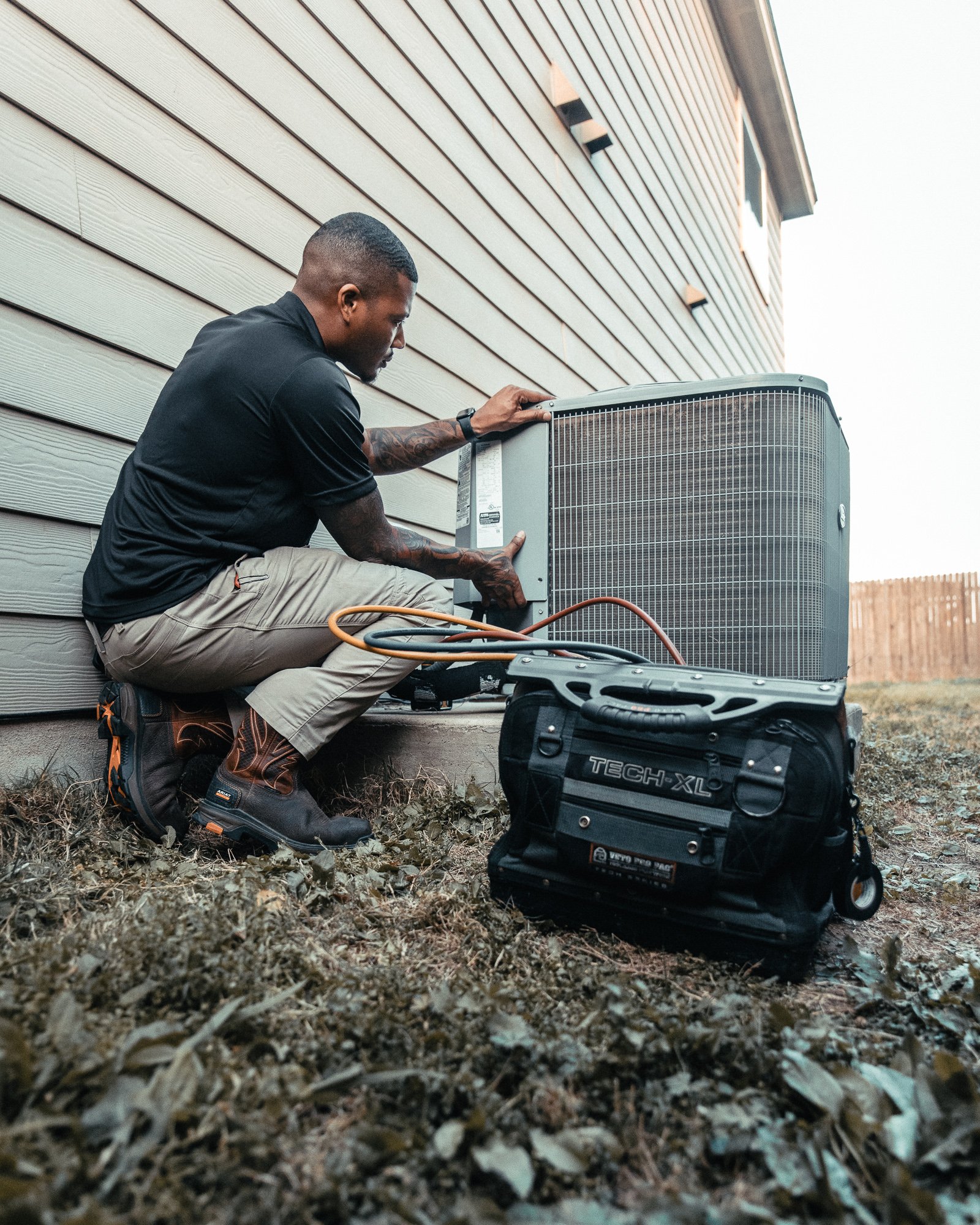
Installation details that separate good jobs from mediocre ones Small installation choices have outsized effects on performance. I keep a short list of details to check on any major install. Confirm that the outdoor unit sits on a level, sturdy pad with a 2 to 3 foot clearance around it for airflow and service access. Verify that refrigerant line lengths and bends are minimized, and that the contractor performs a proper refrigerant charge based on superheat and subcooling, not a factory default charge. Insulated refrigerant lines should be sealed at both ends and protected where they pass through walls.
The indoor coil should be matched electrically and refrigerant-wise to the condenser. Every equipment pairing should come with a written specification sheet. Have the installer show you the static pressure reading, the measured airflow in CFM, and the balance adjustments they make. This transparency separates a contractor who cares about long-term performance from one who simply drops equipment and leaves.
Costs and realistic expectations Expect a range of costs depending on scope. A straightforward replacement of like-for-like equipment might cost several thousand dollars, while a full rework with new ducting, zoning, or hybrid mini-split additions can move into five figures. In Manor, typical central AC replacements for a standard home commonly fall within a broad range because labor rates, brand, and job complexity vary. Ask for itemized bids that separate equipment, ductwork, zoning, and optional elements like whole-house dehumidifiers.
Don’t make decisions on price alone. The cheapest bid often cuts corners in duct sizing, refrigerant charging, or system commissioning. A slightly higher upfront investment in a properly sized and installed system saves on energy and repairs for years. Contractors such as ATX Heating & Air Conditioning frequently provide extended warranties and maintenance plans that reduce long-term cost unpredictability.
Maintenance keeps systems performing Maintenance is not optional for open-plan homes if you want consistent comfort. Filters need checking monthly during heavy-use months, and blowers, coils, and condensate lines should be inspected and cleaned annually. A typical maintenance visit includes checking refrigerant levels, verifying thermostat calibration, measuring airflow, and testing electrical connections. Proactive maintenance extends compressor life and prevents efficiency losses of 10 to 20 percent that accumulate over seasons.
If you’re comparing maintenance plans, look for one that includes priority service, a set of seasonal tune-ups, and parts discounts. When a technician from ATX Heating & Air Conditioning arrives, ask for a checklist of what the tune-up includes and request the measured values, not just a generic “good to go.” Keep those records. They prove performance and can help with warranty claims.
Real-world trade-offs and edge cases Every house is a negotiation between comfort, cost, and aesthetics. I worked on a 3,200 square foot open-plan house with cathedral ceilings where the homeowners wanted crisp, even cooling without visible ductwork. We ended up with a hybrid atxheatingandac.com ATX Heating & Air Conditioning LLC design: a high-efficiency ducted unit for the primary living volume and concealed mini-splits for the loft and a sunroom. The client paid more initially, but they gained zoned control, reduced runtime, and eliminated noisy blowers in sleeping areas. Another homeowner wanted a single unit to save on ductwork. It worked for a while, but they faced humidity issues and added a whole-house dehumidifier later, which would have been a more cost-effective solution if included from the start.
Some houses are poorly suited for single ducted systems without significant renovation. If you have large glass walls, little attic insulation, and an upstairs that functions very differently than the ground floor, a combination of strategies tends to win: better insulation and shading, targeted mini-splits, and a right-sized central unit.
A homeowner checklist for preparing an installation
- gather recent utility bills and note peak usage months and comfort problems you want fixed identify zones you want independent control over, such as upstairs, master suite, or sunroom list current thermostat locations and any drafts or hot spots in the home take photos of the attic access, existing duct runs, and outdoor condenser location prepare questions for the contractor about refrigerant charge method, airflow targets, and warranty coverage
Choosing a contractor and what to expect Pick a contractor with local experience and positive references for similar home layouts. Ask for a Manual J load calculation and a clear explanation of why they selected the equipment. A professional will offer alternatives and explain trade-offs between a variable-speed system, a two-stage system, and a single-stage system. They will provide documented airflow and static pressure measurements after installation and walk you through maintenance expectations.
When working with ATX Heating & Air Conditioning or any reputable local contractor in Manor TX, insist on three things: a written scope that details ductwork and controls, a commissioning checklist that becomes part of your permanent file, and a maintenance plan. A good contractor will also explain practical steps you can take to reduce load before installing new equipment, such as shading windows, adding attic insulation, or sealing duct leaks.

Common pitfalls to avoid Buying equipment based solely on SEER, accepting a verbal promise of “we will size it in the field” without a documented Manual J, and ignoring return placement are three common mistakes. Another is leaving attic access or crawlspace insulation untouched while installing a higher-capacity unit, which just wastes energy. Finally, be wary of contractors who provide vague estimates and short timelines that seem unrealistic for the scope of work; proper ductwork and commissioning take time.
Final persuasion: invest in predictable comfort If you cherish the openness of your home, invest in an installation that respects the volume and use patterns of that space. Proper sizing, thoughtful duct design, strategic zoning, and routine maintenance knit together to deliver consistent comfort. You will pay more upfront for careful design and higher-quality equipment, but you will save on energy, repairs, and the frustration of calling for AC repair in Manor TX every summer.
Work with a local expert who will measure, explain, and stand behind the result. Whether you need AC repair in Manor TX, AC maintenance in Manor TX, or a new Ac installation in Manor TX, prioritize contractors who provide documented calculations, transparent commissioning, and a plan for long-term upkeep. Companies like ATX Heating & Air Conditioning have local experience that matters in Central Texas climates, and their technicians can translate engineering into real, everyday comfort.
ATX Heating & Air Conditioning
13809 Theodore Roosevelt St., Manor, TX - 78653
(737) 406-8083
[email protected]
Website: https://atxheatingandac.com/